Oronsuuts: Mongolia’s Urban Apartment Housing Guide 2026
Most people outside Mongolia have never heard the word oronsuuts. But for millions of people living in Ulaanbaatar and other Mongolian cities, it describes the most fundamental aspect of their daily life: where they live. As Mongolia continues to urbanize at a rapid pace, oronsuuts has become the defining housing model of the country, and understanding it gives you a genuine window into how one of the world’s fastest-changing urban environments actually works.
This guide covers everything you need to know about oronsuuts in 2026. It explains what the word means, where it comes from, how the housing system works, why it matters, what life inside an oronsuuts building looks like, and how this model fits into broader global conversations about urban development and sustainable city living.
What Does Oronsuuts Mean?
Oronsuuts is a Mongolian word that translates roughly to residential housing or dwelling place. In everyday use, it specifically refers to apartment-based housing within multi-story residential buildings. It describes the entire system of organized urban living, not just the physical structure of a building.
When Mongolians talk about oronsuuts, they are talking about a complete residential ecosystem. This includes the apartment units where families live, the shared infrastructure those buildings rely on, such as central heating and water supply, the management systems that keep buildings functional, and the broader community that develops when many households share the same structure and services.
The word carries practical weight in daily conversation. Asking someone in Ulaanbaatar whether they live in an oronsuuts or a ger district immediately communicates two very different pictures of their living situation, their access to infrastructure, their commute patterns, and their relationship with the city. It is one of those words that compresses an enormous amount of social and economic context into a single term.
The Historical Roots of Oronsuuts
To understand why oronsuuts exists and why it matters so much today, you need to look at Mongolia’s history with housing and urbanization.
For centuries, Mongolia was predominantly a nomadic society. The traditional dwelling, the ger, was designed specifically for mobility. It could be assembled and disassembled quickly, transported across vast distances, and set up in new locations as herders followed seasonal grazing patterns. The ger was not just practical. It was deeply embedded in Mongolian culture, representing flexibility, self-sufficiency, and a direct relationship with the natural landscape.
When the Soviet Union brought socialist governance to Mongolia in the 20th century, the country began a rapid and fundamental transformation. The Soviet model prioritized industrialization, central planning, and the development of urban centers. Ulaanbaatar grew into a planned city, and the Soviet government constructed large residential apartment complexes to house the growing urban workforce. These early buildings introduced Mongolians to shared living infrastructure, centralized heating systems, and organized residential management on a scale that had no precedent in the nomadic tradition.
These Soviet-era apartment blocks became the first version of what Mongolians now call oronsuuts. They were functional, practical, and designed to accommodate large numbers of people efficiently. After the Soviet era ended and Mongolia transitioned to a market economy in the early 1990s, urban development continued but under very different conditions. Private developers entered the market, construction methods evolved, and the physical character of Mongolian cities began to change dramatically.
Throughout all of this change, the fundamental concept of oronsuuts remained constant. Organized, shared, multi-unit residential buildings became the standard model for urban housing in Mongolia, and that standard continues to define how cities grow today.
Historical Evolution of Mongolian Housing
| Era | Primary Housing Model | Key Characteristics |
| Traditional | Ger (Nomadic Dwelling) | Mobile, flexible, self-sufficient. |
| Soviet Era | Concrete Block Apartments | Functional, standardized, district heating. |
| Modern (2026) | High-Rise Complexes | Energy-efficient, luxury finishes, private management. |
How the Oronsuuts Housing System Works
“Oronsuuts” is not simply a word for an apartment. It describes a complete system with multiple interconnected components that must all function together for residents to live comfortably.
The Physical Structure
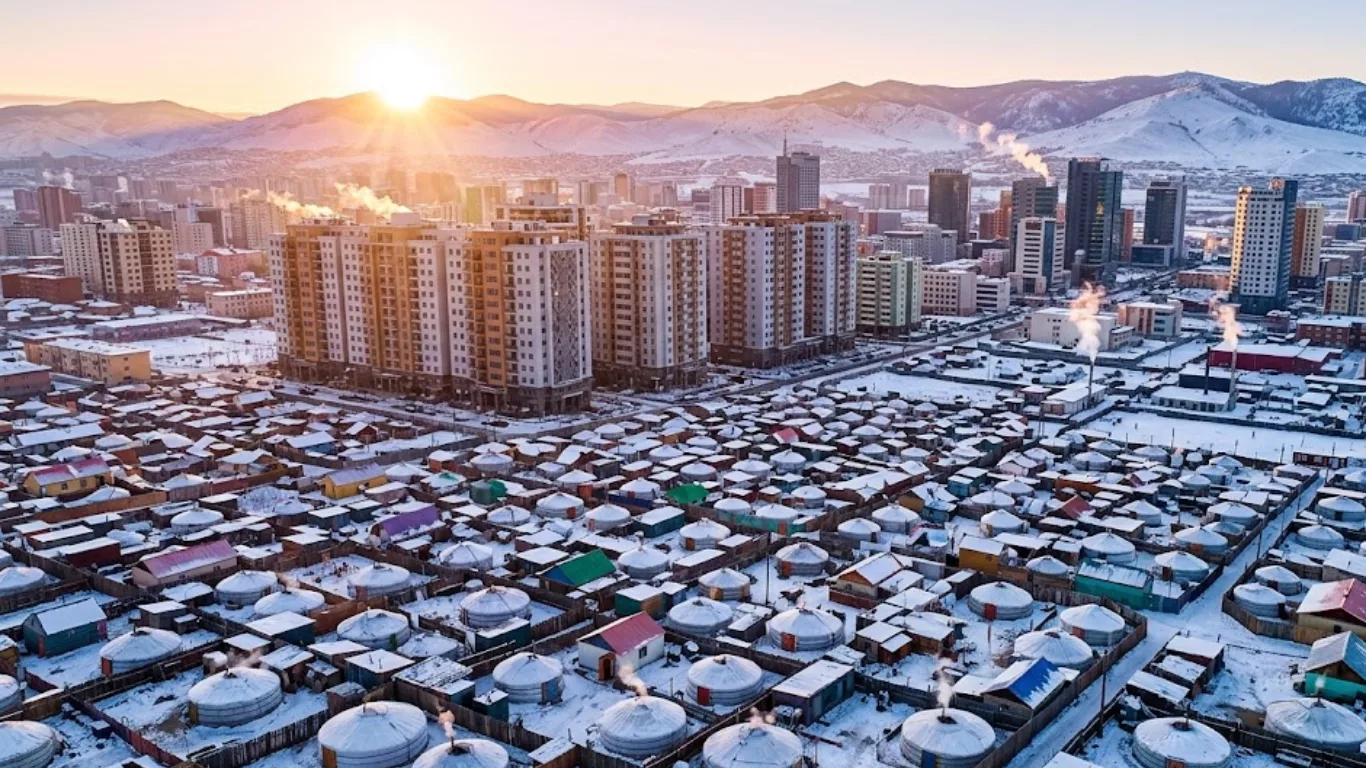
Oronsuuts buildings are typically multi-story concrete structures designed to house dozens or hundreds of families simultaneously. The buildings range from older Soviet-era blocks, which are functional but often showing their age, to modern high-rise complexes that incorporate contemporary design, improved insulation, and updated amenities.
Each building contains individual apartment units of varying sizes, from compact single-room studios to larger family apartments spanning several rooms. The layout of each floor typically includes multiple units arranged along shared corridors. Common areas include lobbies, stairwells, elevators, and sometimes outdoor spaces like parking areas or small parks adjacent to the building.
Central Heating and Utilities
One of the most important features of the oronsuuts system is centralized heating. Mongolia experiences some of the harshest winters on earth, with temperatures in Ulaanbaatar regularly dropping to minus thirty degrees Celsius or colder. Individual heating solutions are insufficient in these conditions. Oronsuuts’ buildings connect to district heating systems that supply hot water through pipes throughout the building, keeping all units warm throughout the winter.
This centralized approach is far more efficient than individual heating solutions at the scale of a large urban population. It reduces fuel consumption, simplifies maintenance, and ensures that every household in the building has access to reliable warmth regardless of their individual resources.
Water supply, electricity, and waste management follow a similar collective model. Utilities enter the building through shared infrastructure and are distributed to individual units. Residents pay for their individual usage but benefit from the economies of scale that come with shared systems.
Building Management
Oronsuuts’ buildings require active management to keep shared systems functioning properly. Management companies or resident associations take responsibility for maintaining common areas, arranging repairs, managing security, and ensuring that the building meets basic standards of cleanliness and safety.
The quality of building management varies significantly across Ulaanbaatar and other Mongolian cities. Well-managed buildings maintain their infrastructure effectively and provide residents with a consistently comfortable environment. Poorly managed buildings can fall into disrepair, with aging heating systems, deteriorating common areas, and unresolved maintenance issues creating problems for residents.
This variation in management quality is one of the key factors that drives differences in property values across the Oronuuts sector. A well-located building with strong management commands higher rents and purchase prices than a comparable building with poor management, even if the two structures are physically similar.
Oronsuuts vs Ger Districts: Two Ways of Living in Mongolian Cities
Understanding oronsuuts requires understanding what they exist alongside. Ger districts are large areas of Mongolian cities where families live in traditional ger dwellings on individual plots of land. In Ulaanbaatar, ger districts surround the city center and house a significant portion of the total urban population.
Life in a ger district looks and functions very differently from life in an oronsuuts building. Ger district residents manage their own heating, typically burning coal or wood in stoves inside their gers. They are responsible for their own water, often purchasing it from distribution points and carrying it to their homes. Sanitation is typically handled through pit latrines rather than connected sewage systems. Roads in rural districts are often unpaved and difficult to navigate in winter.
These conditions create real hardships for the ger district residents, particularly during the extreme winters that Mongolia regularly experiences. Air quality in Ulaanbaatar suffers significantly during cold months as thousands of coal-burning stoves produce heavy pollution. Children in ger districts face greater health risks than those living in well-heated oronsuuts buildings.
The government of Mongolia has made expanding oronsuuts housing a priority precisely because of these quality of life differences. Moving families from ger districts into connected apartment buildings improves health outcomes, reduces pollution, and integrates more residents into the formal urban infrastructure. This transition is one of the defining challenges of urban development in Mongolia today.
Oronsuuts vs. Ger Districts
| Feature | Oronsuuts (Apartments) | Ger Districts |
| Heating | Centralized District Heating | Individual Coal/Wood Stoves |
| Water Supply | Integrated Running Water | Water Distribution Points (Manual) |
| Sanitation | Connected Sewage System | Individual Pit Latrines |
| Location | Centralized/Urban Core | Surrounding City Outskirts |
| Environmental Impact | Lower Emissions (Shared) | Higher Air Pollution (Coal smoke) |
Why People Choose Oronsuuts in 2026
The reasons Mongolian city dwellers choose oronsuuts housing are practical, economic, and social.
Reliability in extreme weather stands as the most immediate motivation. When winter temperatures fall below minus twenty-five degrees, having centralized heating that does not depend on individual effort to maintain is not a convenience but a necessity. Oronsuuts’ buildings deliver warmth consistently, which directly affects the health and comfort of every family member, particularly children and elderly residents.
Proximity to urban services matters enormously. Oronsuuts’ buildings are concentrated in connected parts of the city, close to public transportation, schools, healthcare facilities, shops, and workplaces. Residents save time and money compared to families living in more distant ger districts and commuting to reach the same services.
The security of a permanent address connected to formal systems also carries significant weight. Oronsuuts residents have official addresses, access to banking and government services, and the legal protections that come with formal property ownership or tenancy. These advantages are meaningful in a society where many people still maintain connections to rural communities and need the security of an established urban foothold.
Social factors also influence the choice. Living in an oronsuuts building creates proximity to neighbors and access to a community of people navigating similar urban experiences. While traditional nomadic culture emphasized individual family units and wide open spaces, urban Mongolians increasingly build social networks rooted in the shared spaces and shared challenges of apartment living.
The Real Estate Market for Oronsuuts in 2026
The oronsuuts real estate market in Mongolia is active and reflects the broader pressures of rapid urbanization. Property prices in Ulaanbaatar have risen consistently as more people move to the city and demand for well-located apartments outpaces the supply of quality housing.
New construction continues at a significant pace. Private developers build modern high-rise complexes that offer improved insulation, contemporary finishes, and amenities that older Soviet-era buildings cannot match. These new buildings command premium prices but attract buyers and renters willing to pay for better living conditions.
Foreign investment plays an increasing role in the Mongolian real estate market. As Mongolia’s economy grows, driven by its substantial mineral resources, international investors have shown interest in Ulaanbaatar’s developing property market. This inflow of capital has both accelerated construction and contributed to rising prices in certain segments of the market.
Affordability remains a genuine challenge. Many families who want to move from ger districts into oronsuuts buildings struggle to access the capital needed for a purchase or to afford monthly rents for quality apartments. Government housing programs aim to bridge this gap, but demand consistently exceeds available subsidized units.
The rental market for oronsuuts apartments is well developed. Many property owners purchase units as investments and rent them to residents who cannot afford to buy. Rental prices vary significantly based on location, building condition, unit size, and the quality of management and infrastructure.
What Life Inside an Oronsuuts Building Looks Like
For a family living in an oronsuuts apartment, daily life has a rhythm shaped by the building’s shared systems and the neighborhood’s character.
Mornings begin with the comfort of a warm apartment, the central heating system having maintained a comfortable temperature overnight regardless of the cold outside. Children prepare for school and often walk or take public transport to nearby educational facilities. Adults head to work, typically in the city center or surrounding commercial areas that are well connected by public transport to most oronsuuts-concentrated neighborhoods.
Throughout the day, the building’s shared spaces serve different purposes. Elevators move residents between floors. Lobbies serve as transition points between the private world of individual apartments and the public life of the street. Many buildings have management offices where residents can report maintenance issues or pay utility fees.
Evenings bring families back together in apartments that function as genuine homes, spaces for cooking, eating, relaxing, and spending time with family. Neighbors interact in corridors and common areas, building the kind of familiarity that develops naturally when many people share the same building over months and years.
On weekends, residents often visit nearby parks, markets, and entertainment venues that are typically well-positioned for residents to access. The convenience of urban infrastructure is a constant advantage of this lifestyle, particularly compared to more isolated living situations.
Oronsuuts and Sustainable Urban Development
As Mongolia looks toward its future, the oronsuuts model connects directly to broader conversations about sustainable urban development. Centralized heating systems, when managed efficiently, consume less energy per household than individual heating solutions. Modern oronsuuts construction increasingly incorporates improved insulation standards that reduce heat loss and lower the energy demands of each building.
High-density apartment living also uses urban land more efficiently than low-density alternatives. When more families live within a smaller geographic footprint, cities can provide services, including roads, utilities, public transport, and amenities, to more residents with less infrastructure investment per person.
Mongolia faces significant environmental challenges, particularly the severe air pollution that coal-burning in ger districts creates every winter. Expanding oronsuuts housing and connecting more residents to centralized district heating directly reduces the number of individual coal stoves operating in the city. This is one of the most impactful steps available to improve Ulaanbaatar’s air quality and the health of its residents.
The oronsuuts model, when developed thoughtfully with attention to quality construction, fair management, and genuine affordability, represents a genuinely sustainable path forward for Mongolian urban development in 2026 and beyond.
Common Misconceptions About Oronsuuts
Several misunderstandings circulate about oronsuuts that are worth addressing directly.
Some people assume that oronsuuts always refers to low-quality Soviet-era housing. In reality, the term covers the full range of Mongolian apartment housing, from aging buildings that need significant renovation to modern luxury complexes with contemporary amenities and high construction standards.
Others assume that oronsuuts’ life means sacrificing community and connection in exchange for modern convenience. In practice, many oronsuuts buildings foster strong community bonds among residents. Shared spaces, shared challenges, and physical proximity create genuine relationships between neighbors.
A third misconception is that oronsuuts is a purely Mongolian concept with no relevance to broader global discussions. In fact, the challenges Oronsuuts addresses, rapid urbanization, extreme climate demands, and the transition from traditional to modern living are challenges that many countries face. The solutions Mongolia develops in this context have potential lessons for urban development globally.
Conclusion
“Oronsuuts” is far more than a word for apartment buildings. It is the backbone of urban life in Mongolia, a housing system that has evolved over decades to address the specific demands of an extreme climate, a rapidly urbanizing population, and a society navigating the shift from nomadic tradition to modern city living.
Understanding oronsuuts means understanding how Mongolian cities actually function: how families stay warm through brutal winters; how communities form in shared buildings; how real estate markets respond to intense urbanization pressure; and how a country works to improve living standards for residents transitioning from ger districts into connected urban infrastructure.
In 2026, Oronsuuts stands at the center of Mongolia’s most important urban challenges and opportunities. It represents both the achievements of the country’s urban development journey and the work that remains to ensure that quality, affordable, and sustainable housing reaches every family that needs it.
FAQs
What does “oronsuuts” mean?
“Oronsuuts” is a Mongolian word that means residential housing or apartment dwelling. “It refers specifically to organized urban apartment systems in multi-story buildings, including all shared infrastructure like central heating, utilities, and building management services.
Where is Oronsuuts’ housing most common?
Oronsuuts’ housing is most concentrated in Ulaanbaatar, Mongolia’s capital and largest city. It also exists in other Mongolian urban centers, but Ulaanbaatar accounts for the vast majority of oronsuuts’ buildings and residents.
How is Oronsuuts different from ger district living?
Oronsuuts’ buildings connect residents to centralized heating, running water, sewage systems, and organized management. Ger districts consist of traditional dwellings on individual plots that require residents to manage their own heating and water independently, without the benefit of connected urban infrastructure.
Is Oronsuuts housing affordable in 2026?
Affordability varies widely. Older buildings in less central locations remain relatively accessible, while modern apartments in well-connected neighborhoods command prices that many families find challenging. Government housing programs aim to improve access, but demand consistently exceeds the supply of affordable, quality units.
Why is oronsuuts important for Mongolia’s future?
Expanding quality oronsuuts housing is central to Mongolia’s urban development strategy. It reduces air pollution by replacing coal-burning individual stoves, improves public health, supports sustainable land use, and provides residents with reliable access to essential urban services.