Kouskousi: What It Is, Where It Came From & Why You Need It
Most people have never heard of kouskousi. But once you try it, you will wonder why it took so long to find it. This tiny pasta bead has been feeding Mediterranean families for centuries, and in May 2026, it is finally getting the global attention it deserves.
Kouskousi is a small, round pasta made from durum wheat semolina, cooked by boiling, and used in everything from thick soups to fresh salads. It is not couscous, even though the names sound similar. It is its own thing entirely, and it is genuinely one of the most versatile ingredients you can keep in your kitchen.
This article covers everything you need to know about kouskousi: its real origins, how it differs from couscous, how to cook it properly, the best recipes to use it in, its nutritional value, and the one cooking mistake that ruins most people’s first batch.
What Is Kouskousi? A Clear Answer
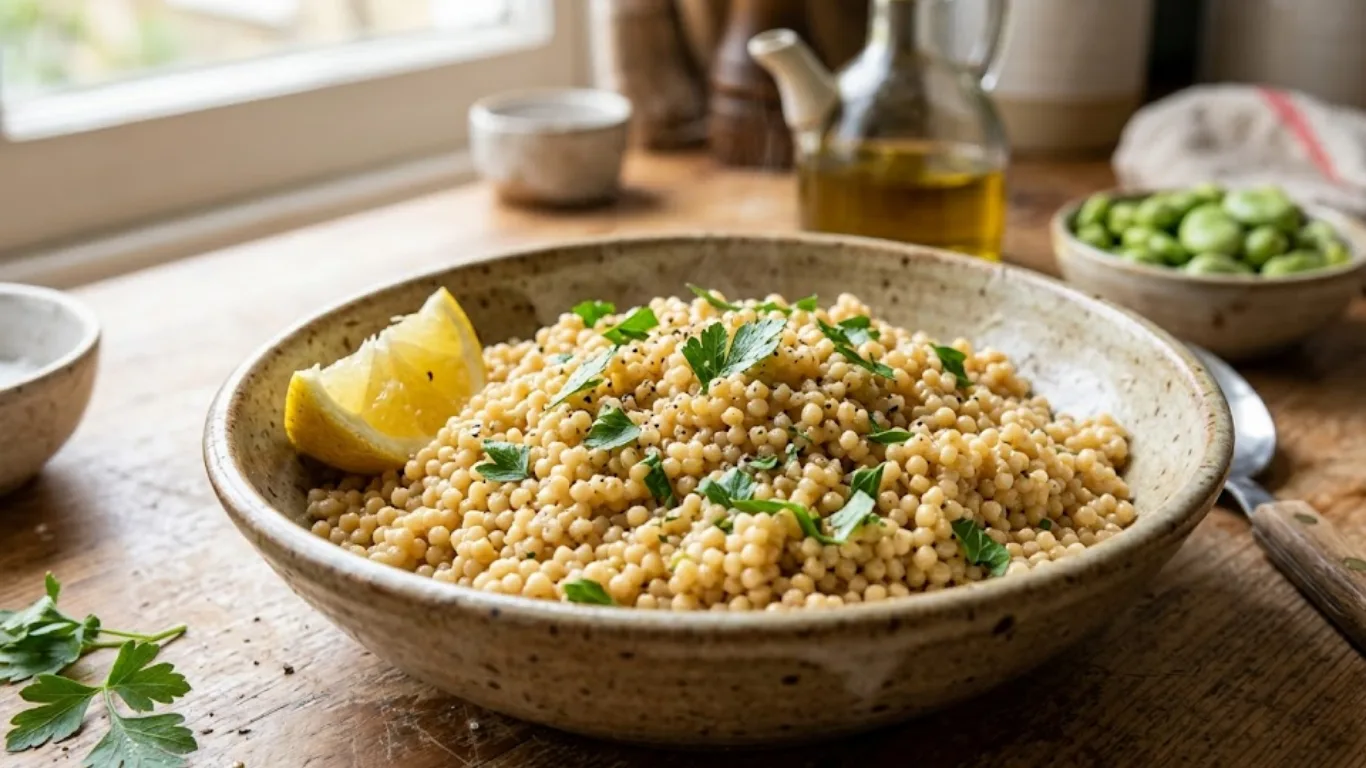
Kouskousi is a tiny, round pasta bead measuring roughly 2 to 3 mm across. It is made from durum wheat semolina and cooked by boiling in salted water or broth, just like any other pasta. Unlike couscous, which is steamed semolina that puffs up light and fluffy, kouskousi stays firm and slightly chewy when cooked.
It holds its shape well in soups and stews, absorbs flavor deeply, and pairs with almost any ingredient you have on hand. The pasta originated in the Mediterranean region, with the strongest historical ties to Malta and Greece.
The True Origins of Kouskousi: Malta, Greece, and the Arab World
Here is where it gets interesting, and where most other articles get it wrong.
Kouskousi did not start in North Africa as a form of couscous, even though the name suggests that. The clearest historical root traces to Malta, a tiny island nation sitting between Sicily and Tunisia.
How Malta Created the Pasta We Now Call Kouskousi
The Maltese word for it is “kusksu,” and it gives its name to one of Malta’s most iconic dishes: a thick soup made with broad beans, poached eggs, and fresh Maltese cheese called ġbejniet.
According to Wikipedia’s entry on Kusksu, a document from the 18th century references a peppercorn-shaped pasta as a staple of the Maltese diet. In 2002, MaltaPost even issued a commemorative stamp series celebrating Maltese cuisine, and the kusksu soup made the cut.
The Arab occupation of Malta between the 9th and 11th centuries heavily influenced the island’s food culture. The word “kusksu” almost certainly comes from the Arabic “kuskus,” but the Maltese adapted it into something entirely different: a firm, boiled pasta bead rather than a steamed semolina grain. Over time, this pasta traveled through Mediterranean trade routes into Greek and Italian cooking.
Kouskousi in Greek Cooking
In Greece, kouskousi refers specifically to the tiny pasta beads used in home soups and warm salads. Chef Diane Kochilas, host of the PBS show “My Greek Table” and author of over a dozen Greek cookbooks, has featured kouskousi in recipes pairing it with Swiss chard, chickpeas, leeks, and ginger.
Her work helped introduce this pasta to American home cooks who had never seen it before. Greek kouskousi is slightly different in texture from the Maltese version, but the base ingredient and cooking method are the same.
The Sardinian Connection
Sardinian fregola (also spelled fregola sarda) is the closest Italian cousin to kouskousi. It is toasted, which gives it a nuttier flavor, and it ranges from small to medium in size. Like kouskousi, it is made from semolina and water, rolled into small balls and cooked by boiling. If you cannot find kouskousi at your local store, authentic fregola from Sardinia is the best substitute you can get.
Read more: Vitilinox Guide: Support for Vitiligo & Skin Pigmentation
Kouskousi vs Couscous: They Are Not the Same Thing
This is the question almost everyone asks first, and it deserves a real answer.
Couscous is steamed semolina. It is cooked by pouring hot liquid over it and letting it absorb the moisture, which makes it fluffy and light. The grains are very small and break apart easily. Couscous comes from North African cuisine, especially Morocco, Algeria, and Tunisia, where it has been prepared by hand for over a thousand years.
Kouskousi is boiled pasta. You drop it into boiling salted water or broth, cook it for 8 to 12 minutes, and drain it. The beads stay firm. They hold their shape in a simmering pot without turning to mush. They chew differently. They absorb broth slowly from the inside rather than soaking it up all at once.
A Quick Side-by-Side Comparison
| Feature | Kouskousi | Couscous |
| Base ingredient | Durum wheat semolina | Durum wheat semolina |
| Cooking method | Boiled in salted water | Steamed or soaked in hot liquid |
| Texture when cooked | Firm, slightly chewy | Light, fluffy, soft |
| Shape | Round pasta bead, 2-3 mm | Tiny crumb-like grain |
| Best use | Soups, stews, warm salads | Side dishes, tagines, cold salads |
| Origin | Malta, Greece, Mediterranean | North Africa (Morocco, Algeria) |
| Cooking time | 8 to 12 minutes | 5 minutes (instant) |
The reason confusion exists is simple: in some markets, especially outside Malta and Greece, kouskousi gets labeled as “giant couscous” or “pearl couscous.” That name is misleading but common.
What Does Kouskousi Actually Taste Like?
On its own, kouskousi has a mild, slightly wheaty flavor with no strong character of its own. That is exactly what makes it valuable. It acts as a flavor sponge. Cook it in chicken broth, and it tastes like a rich, savory pasta. Toss it with olive oil and lemon, and it tastes bright and clean. Add it to a tomato-based stew, and it absorbs all that depth.
The texture is what sets it apart. It has a satisfying al dente bite, a slight chew that couscous cannot match. When you bite into a properly cooked bead of kouskousi, it resists just slightly before giving way. That texture makes it feel more like a real meal than couscous, which can sometimes feel like soft mush.
How to Cook Kouskousi: Step-by-Step
Cooking kouskousi is simple, but there are a few details that separate a great bowl from a forgettable one.
The Basic Boiling Method
- Bring a pot of well-salted water or broth to a full boil.
- Add the kouskousi and stir immediately to prevent clumping.
- Cook for 8 to 12 minutes, tasting at the 8-minute mark for al dente texture.
- Drain through a fine-mesh strainer.
- Toss immediately with a drizzle of good olive oil.
That olive oil step matters. Without it, the beads stick together into a clump as they cool. The oil coats each bead and keeps them separate.
The Broth Method (Recommended)
Skip the water entirely. Use vegetable broth, chicken stock, or even a light fish stock instead. The pasta absorbs liquid as it cooks, so whatever flavor is in that liquid ends up inside the pasta. This single change makes an enormous difference in the final dish.
Toasting Before Boiling (Advanced Step)
Toast the dry kouskousi in a dry pan over medium heat for 2 to 3 minutes before adding it to the liquid. Stir constantly. You will see it start to turn a light golden color and smell faintly nutty.
Then add your broth and cook as normal. This technique, borrowed from the Sardinian fregola tradition, adds a depth of flavor that most recipes completely skip.
Read more: Döziv Guide: The Mindset of Calm Endurance & Modern Strength
The Best Kouskousi Recipes You Should Try in 2026
Traditional Maltese Kusksu Soup
This is the dish that put kouskousi on the map. The core recipe uses seasonal broad beans (also called fava beans), kouskousi pasta beads, and fresh ġbejniet, which are small rounds of fresh Maltese goat’s milk cheese. An egg is poached directly in the simmering soup. The result is rich, hearty, and deeply comforting.
You do not need to be in Malta to make it. Outside Malta, substitute fresh ricotta or queso fresco for the ġbejniet, and use fresh or frozen fava beans. The kouskousi goes in about 15 minutes before serving and cooks right in the broth, which means every bead absorbs the flavor of the beans, tomato paste, garlic, and mint.
Diane Kochilas’s Kouskousi with Swiss Chard and Chickpeas
Chef Diane Kochilas developed a recipe that takes the Greek version of kouskousi in a completely different direction. She cooks the pasta separately in salted water, then folds it into a skillet with sautéed onion, garlic, leek, ginger, wilted Swiss chard, and canned chickpeas.
The ginger is unexpected in a Mediterranean dish, but it works. It adds warmth without heat, and it balances the earthy flavor of the chard.
This dish is done in under 30 minutes and works as a weeknight dinner or a side dish next to grilled fish or lamb.
Cold Kouskousi Salad with Roasted Vegetables
Cook the kouskousi in broth, drain it, and let it cool. Toss with roasted cherry tomatoes, cucumber, kalamata olives, fresh parsley, lemon juice, and a generous pour of olive oil.
This salad holds up well for two days in the fridge and actually improves overnight as the pasta absorbs the dressing. It is the kind of dish you make on a Sunday and take to work all week.
Nutritional Value of Kouskousi: What You Actually Get
A 100-gram serving of cooked kouskousi provides roughly 170 to 180 calories, about 6 grams of protein, less than 1 gram of fat, and around 35 grams of carbohydrates. It also contains small but meaningful amounts of iron, magnesium, selenium, and B vitamins, especially niacin and thiamine.
Whole wheat versions of kouskousi offer more fiber per serving, which slows digestion and keeps you full longer. For anyone following a Mediterranean-style diet, that matters.
Why Kouskousi Fits the Mediterranean Diet Perfectly
The Mediterranean diet ranked number one in U.S. News and World Report’s Best Diets list for the eighth consecutive year in January 2025, earning a score of 4.8 out of 5.0 from a panel of 69 nutrition experts.
A 2025 meta-analysis also found that following a Mediterranean diet reduced the risk of cognitive impairment by up to 18 percent. Kouskousi fits this dietary pattern naturally. It pairs with olive oil, legumes, vegetables, and fish, which are the core building blocks of Mediterranean cooking.
Kouskousi is not a superfood. It is a smart, flexible carbohydrate that works best when surrounded by good ingredients.
The One Mistake 90% of First-Time Kouskousi Cooks Make
Here is something no other article about kouskousi seems to mention.
Most people cook kouskousi the same way they cook large pasta, in a big pot of boiling water, and then drain it. The result is technically edible, but flat and uninteresting.
The pasta does not get the chance to absorb any flavor. You end up with a pile of bland beads that needs heavy seasoning to taste like anything.
The mistake is treating it like regular pasta instead of treating it like the flavor-absorbing bead it actually is.
Think of a home cook in Athens who buys kouskousi for the first time, boils it in plain water, and then cannot understand why it tastes so bland compared to what she had at a restaurant. The difference is not the recipe. It is the liquid. The restaurant almost certainly cooked the kouskousi in broth, not water, and finished it with a ladle of the stew liquid before plating.
The fix is simple: always cook kouskousi in the most flavorful liquid available. That might be chicken stock, vegetable broth, the liquid from a can of tomatoes, or even water that has had garlic and herbs simmering in it for 10 minutes first.
If you are adding it directly to a soup or stew, add it with enough liquid to cook through and let it finish in the pot. That is when kouskousi becomes extraordinary.
Does Kouskousi Contain Gluten? A Direct Answer
Yes, kouskousi contains gluten. It is made from durum wheat semolina, which is a wheat product. Anyone with celiac disease or a serious wheat allergy should avoid standard kouskousi.
There are no widely available certified gluten-free versions of this specific pasta. People with gluten sensitivity who want a similar texture can try certified gluten-free pearl couscous made from corn or rice flour, though the taste and texture will be different.
Where to Buy Kouskousi in 2026
Kouskousi is becoming easier to find as Mediterranean food culture grows globally. Here is where to look.
- Specialty Mediterranean grocery stores and delis often carry it, especially in cities with Maltese, Greek, or North African communities.
- Online retailers, including Amazon, specialty food sites, and Maltese food importers, stock it year-round.
- In the UK, some independent food shops in London, Manchester, and Birmingham carry it under the names “kouskousi,” “kusksu pasta,” or “giant couscous.”
- In the United States, it sometimes appears in Middle Eastern grocery stores as “moghrabieh” or “Lebanese couscous,” which is a similar but slightly larger pasta bead.
- Prices typically run from 1 to 4 dollars or pounds per 500-gram pack, making it one of the most affordable specialty pastas available.
If you cannot find it locally, Sardinian fregola is the best substitute and is widely available in Italian specialty stores and online.
Kouskousi in 2026: Why This Pasta Is Having a Moment
Interest in traditional Mediterranean ingredients has grown steadily over the past several years. As of early 2026, food creators on TikTok and Instagram have been posting kouskousi recipes that reach millions of viewers. The Maltese Kusksu soup in particular gained traction after several food travel accounts featured it during visits to Valletta, Malta’s historic capital city and the smallest capital in the European Union.
Diane Kochilas has also played a meaningful role in bringing Greek kouskousi to international audiences through her PBS show and online recipe platform. The combination of her reach and the general surge of interest in Mediterranean diet cooking has put this once-obscure pasta on kitchen tables far outside its home region.
The appeal in 2026 is easy to understand. People want food that is affordable, quick to cook, nutritionally sound, and connects to a real culinary tradition. Kouskousi delivers all of that in under 30 minutes.
Read more: Veganovies com: Your Ultimate Guide to Vegan Living in 2026
Frequently Asked Questions About Kouskousi
Is kouskousi the same as couscous?
No. Couscous is steamed semolina that becomes light and fluffy. Kouskousi is a boiled pasta bead that stays firm and chewy. The two are made from similar ingredients but cooked differently and feel completely different to eat.
How long does kouskousi take to cook?
Kouskousi usually takes 8 to 12 minutes to cook when boiled in salted water or broth. If added directly to a simmering soup, it may take 15 minutes. Always taste it to check for the right texture before draining.
Is kouskousi healthy?
Yes, when eaten as part of a balanced meal. It provides complex carbohydrates, some protein, B vitamins, iron, and selenium. Whole wheat versions also add fiber. It is most nutritious when paired with vegetables, legumes, and healthy fats like olive oil.
Can I use kouskousi in cold salads?
Yes. Cook it, drain it, toss immediately with olive oil to prevent sticking, and let it cool before mixing with your salad ingredients. It holds up well in the fridge for two days.
What is a good substitute for kouskousi?
Sardinian fregola is the closest substitute. It is made from semolina, similar in size, and holds its texture during cooking. Pearl couscous or Israeli couscous works as a second option, though the texture is slightly different.
Why is my kouskousi sticking together?
You did not add oil right after draining. The moment you drain cooked kouskousi, toss it with a drizzle of olive oil. That coats each bead and keeps them from clumping.
Is kouskousi gluten-free?
No. Standard kouskousi is made from durum wheat and contains gluten. People with celiac disease should avoid it.
What does kouskousi taste like?
On its own, it has a mild, slightly wheaty flavor. Its real power is absorbing whatever liquid or sauce surrounds it. Cooked in good broth, it tastes rich and savory.
Can you toast kouskousi before cooking it?
Yes, and it is worth doing. Toasting dry kouskousi in a pan for 2 to 3 minutes before adding liquid gives it a nutty depth that improves almost any recipe.
Where does kouskousi come from?
The strongest historical origin is Malta, where it appears in records dating to the 18th century and gives its name to the national soup, kusksu. It also has a long tradition in Greek home cooking. The pasta likely evolved from Arabic culinary influence during the Arab occupation of Malta between the 9th and 11th centuries.
Conclusion
Kouskousi is a pasta with a long history, a distinct texture, and more cooking flexibility than almost anything else you can put in a pot. Its roots in Maltese and Greek kitchens run deep, and its connection to the Mediterranean diet means it fits naturally into one of the healthiest ways to eat in 2026. The key takeaways are simple: it is not couscous, it must be cooked in flavorful liquid to reach its potential, and once you learn to use it properly, it becomes one of those ingredients you always keep stocked. Give it one honest try in a real broth, and it will not be the last time.
For a deeper look at the broader history of pasta traditions across cultures, the Wikipedia entry on couscous provides useful context on how this family of semolina-based foods spread across the Mediterranean world.