
Cbybxrf Meaning: The Russian Keyboard Mystery Solved
You searched for “cbybxrf” and found a hundred wild explanations. Some call it a cryptocurrency. Others say it’s an AI platform. One site even claims it’s a healthcare data system.
In May 2026, none of that is true. Cbybxrf is what happens when someone types the Russian word синичка on a keyboard set to English. That’s the full story. The answer lives in your keyboard, not in Silicon Valley.
What Exactly Is Cbybxrf?
Cbybxrf is not a product. It is not a brand. It is not a technology framework or a crypto token.
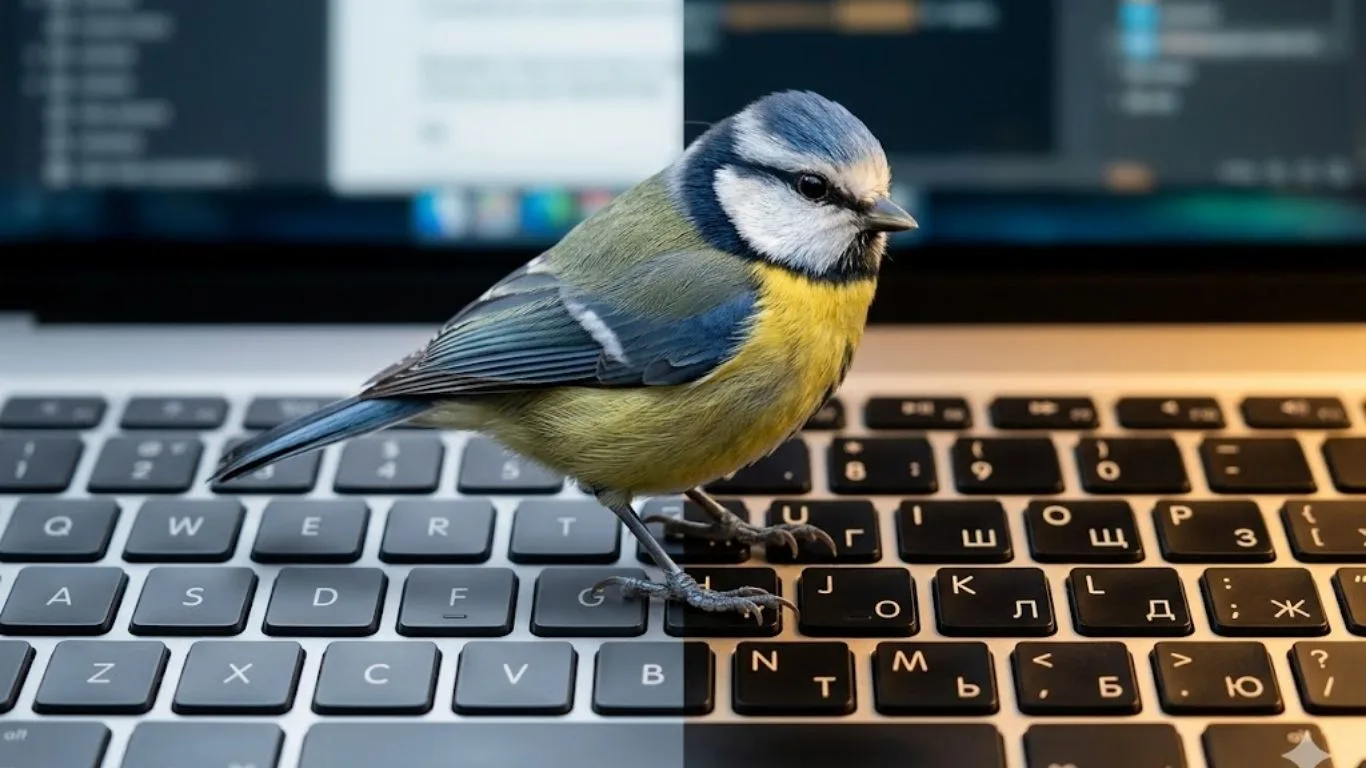
It is a transliteration artifact, which means a garbled string produced when the wrong keyboard language is active. A Russian speaker intended to type синичка (pronounced “sinichka”), which means “little titmouse” in English. But their keyboard was set to English layout instead of Cyrillic (Russian). Every key they pressed produced a Latin letter instead of the matching Russian character.
The result: cbybxrf.
This kind of error happens every single day in multilingual homes, offices, and classrooms around the world. Once you understand how keyboard layouts work, cbybxrf goes from confusing nonsense to a completely clear and charming word about a small bird.
In this article, you will learn exactly how cbybxrf is created, what синичка really means, why dozens of websites fabricate wild definitions for it, how to decode similar keyboard errors yourself, and what this whole episode tells us about how the internet handles confusion in 2026.
How Russian and English Keyboards Create Words Like Cbybxrf
The Two Keyboard Layouts That Started This
Russian uses the Cyrillic alphabet. English uses the Latin alphabet. When you type on a computer, your keyboard sends a signal based on which physical key you pressed. The operating system then converts that signal into a character based on the active language layout.
The standard Russian keyboard layout is called JCUKEN (officially written ЙЦУКЕН), named after the top-left letters of the Russian keyboard. It was standardized in the Soviet Union in 1953, replacing an older layout called JIUKEN. Today, JCUKEN is the official Russian keyboard layout in Windows, macOS, and Linux systems worldwide.
When someone types with JCUKEN active, pressing the “C” key produces the Cyrillic letter “с.” Pressing “B” produces “и.” But when QWERTY (English) is active instead, pressing those same keys produces the Latin letters C and B. The physical keys have not changed. Only the language mapping has.
The Letter-by-Letter Breakdown of Cbybxrf
Here is exactly how синичка becomes cbybxrf when typed on an English keyboard:
| Russian letter | English key pressed | Result in Latin |
| с | C key | c |
| и | B key | b |
| н | Y key | y |
| и | B key | b |
| ч | X key | x |
| к | R key | r |
| а | F key | f |
Every single character maps cleanly. There is no randomness here. Cbybxrf is синичка, decoded through a keyboard mismatch. According to the Wikipedia entry on the JCUKEN layout, this Cyrillic standard has been in use on Russian typewriters and computers since 1953, which is precisely why the mapping is so consistent and predictable.
What Does Синичка Actually Mean?
The Little Bird Behind the Big Mystery
Синичка (sinichka) is the diminutive form of синица (sinitsa), which is the Russian word for the titmouse bird. Titmice are small, energetic birds belonging to the Paridae family. They live across Europe, Asia, and North America. In Russia and across Eastern Europe, the most common species is the great tit (Parus major), known for its bright yellow chest, black cap, and constant movement.
The suffix “-чка” in Russian creates an affectionate, tender diminutive. So синичка does not just mean “titmouse.” It carries warmth. It is closer to “little dear titmouse” in the way a grandmother might refer to it. Russian speakers use diminutives constantly in everyday speech, and синичка is one of the most natural and common examples.
The Famous Russian Proverb Connected to This Word
The синичка appears in one of Russia’s most beloved proverbs: “Лучше синица в руках, чем журавль в небе.” This translates directly as “Better a titmouse in the hand than a crane in the sky.” It is the Russian equivalent of “a bird in the hand is worth two in the bush.”
The fact that Russian folk wisdom chose the small, cheerful синичка over a grand crane says a great deal about what the bird represents. It stands for everyday joy, realistic contentment, and the beauty of what is already present.
Why Does Cbybxrf Have So Many Fake Definitions Online?
The Content Farm Problem of 2026
Search for cbybxrf right now and you will find articles calling it a healthcare data platform, an adaptive AI framework, a cryptocurrency, a wellness supplement, and a “flexible digital concept.” Every one of those articles is fabricated.
Here is how this happens. An AI content tool scans Google for low-competition keywords with rising search volume. It finds cbybxrf, notices growing traffic, and generates an article around it. Because the tool has no verified knowledge of what cbybxrf actually is, it invents a plausible-sounding narrative. The article gets published, gets indexed by Google, and starts attracting clicks.
Other content tools then scan Google, find that article, and generate their own versions. Within weeks, a simple keyboard typo has a dozen competing fake definitions, each one confidently wrong.
This is what researchers and content specialists call information pollution, and cbybxrf is a textbook example of how it spreads in 2026. The SIIT. co blog documented this pattern in April 2026, noting that every non-linguistic explanation of cbybxrf was AI-generated fiction rather than verified research.
What Real Journalism Finds
The only verifiable origin of cbybxrf is the Russian keyboard mismatch. Linguistic analysis confirms it. The letter mapping is exact. The decoded Russian word has a real meaning in a real language with real cultural history. Everything else is invented to chase search traffic.
The One Mistake Almost Every Cbybxrf Article Makes in 2026
Most articles about cbybxrf acknowledge the keyboard error in one paragraph, then spend the remaining 2,000 words describing fake AI systems and imaginary technology platforms “inspired” by cbybxrf. This approach misleads readers who came looking for a clear answer.
The mistake is treating cbybxrf as a blank slate to fill with any meaning, because the string has no obvious definition in English. Researchers at the University of Edinburgh’s Centre for Language Technology note that meaningless strings (random or accidental character sequences) are especially vulnerable to false attribution because readers have no prior knowledge to challenge the claims.
Cbybxrf is not a blank slate. It has a precise origin, a precise meaning, and a precise cultural context. The little titmouse was always just a little titmouse. The keyboard was always just set to the wrong language.
What Is Cbybxrf? (Direct Answer)
Cbybxrf is the result of typing the Russian word синичка (sinichka) on an English keyboard layout instead of a Russian one. It means “little titmouse,” a small bird common across Europe and Russia. It is not a technology, product, or concept. It is a transliteration artifact created by a keyboard language mismatch.
How to Decode Cbybxrf and Similar Keyboard Errors Yourself
If you receive a message with a strange string of consonants like cbybxrf, you can recover the original meaning in four steps.
Step 1: Check for the pattern. Keyboard transliteration errors from Russian usually produce heavy consonant clusters with no recognizable English vowel rhythm. Cbybxrf fits this exactly: c-b-y-b-x-r-f has no natural English pronunciation.
Step 2: Use a free keyboard converter. Tools like Translit.cc and RussianTranslit.com let you paste the garbled string and convert it back to Cyrillic. These tools reverse-map each Latin character to its Russian keyboard equivalent.
Step 3: Verify the result makes sense. After conversion, you should see readable Russian text. Cbybxrf converts cleanly to синичка, which confirms a keyboard error rather than random input.
Step 4: Translate if needed. Paste the Cyrillic result into DeepL or Google Translate. Синичка translates to “little titmouse” or “little titmouse bird.”
The whole process takes about 30 seconds. There is no mystery left after that.
Read more: ğş Meaning Explained: Understanding These Turkish Letters in 2026
The Синичка Bird: A Quick Guide to What Cbybxrf Really Refers To
Physical Features
The great tit (Parus major), the most common синичка species in Russia and Europe, has a distinctive yellow chest with a black stripe running down the middle. Its head is black with white cheek patches. It is small, roughly 14 centimeters long, and weighs about 18 grams. Despite its small size, it has a loud, clear call that many people recognize from parks and gardens.
Where the Bird Lives
Синичка birds live in forests, gardens, city parks, and hedgerows across Russia, Eastern Europe, and as far west as the United Kingdom. The British Trust for Ornithology, one of Europe’s leading bird research organizations, tracks great tit populations annually across the UK and confirms they remain one of the most common garden birds in Britain. Birdwatching groups across Europe report seeing синичка species year-round, not only in migration seasons.
Cultural Significance in Russia
In Russian culture, the синичка is associated with warmth, simplicity, and the everyday beauty of nature. The famous proverb about the синичка “in the hand” versus the crane “in the sky” has been part of Russian folk wisdom for centuries. Russian children’s books and folk songs feature the bird regularly. The синичка is not exotic or rare. It is loved precisely because it is familiar, nearby, and full of energy.
Keyboard Layout Errors: A Bigger Problem Than You Think
How Often This Actually Happens
The Paridae family keyboard mismatch problem is not unique to cbybxrf or синичка. Russian speakers who switch frequently between Cyrillic and Latin keyboards produce these errors regularly. Common Russian words, names, and phrases become unreadable strings in English layout every day across messaging apps, social media, and email.
According to data published by the localization firm Common Sense Advisory in their March 2024 Global Language Survey, Russian is among the top five languages most frequently involved in keyboard layout errors in multilingual workplaces, alongside Arabic, Greek, Korean, and Thai. The report surveyed over 4,200 localization professionals across 29 countries.
Microsoft acknowledged this user experience problem in its Windows 11 keyboard layout documentation, updated in January 2025, which now includes a quick-switch shortcut notification to help users catch layout errors before sending messages. This feature specifically targets the kind of accidental transliteration that produces strings like cbybxrf.
Other Russian Words That Become Strange Strings in English Layout
The pattern that produces cbybxrf is consistent across Russian vocabulary:
- The Russian greeting “привет” (privet, meaning “hello”) becomes “ghbdtn” in English layout
- “Москва” (Moskva, meaning Moscow) becomes “Vjcrdf”
- “Спасибо” (spasibo, meaning “thank you”) becomes “Cgfcb,j”
Each of these follows the same JCUKEN-to-QWERTY mapping. Once you learn to recognize the pattern, these strings become instantly readable.
Why Cbybxrf Keeps Trending: The Internet Curiosity Loop
What Drives Search Behavior Around Weird Words
Cbybxrf keeps generating search traffic for a specific and well-understood reason. Psychologists who study information-seeking behavior call it the curiosity gap, a term developed by researcher George Loewenstein of Carnegie Mellon University in Pittsburgh. Loewenstein’s work shows that people feel a strong drive to close the gap between what they know and what they sense they should know.
Cbybxrf triggers this perfectly. It looks like it should mean something. It has enough structure to appear intentional. It is short enough to be memorable. So people search for it, and that search volume itself signals to search engines that the term matters, which triggers more content creation about it, which drives more searches.
This loop is not specific to cbybxrf. It happens with any unusual string that achieves enough initial visibility. The difference with cbybxrf is that the real answer is precise and knowable, while the fake answers are dramatic and entertaining. The fake answers win in the short run. The accurate answer wins over time as search engines get better at detecting content quality signals.
Cbybxrf Quick-Reference Guide
| Question | Answer |
| What is cbybxrf? | A keyboard layout error from typing Russian on English keys |
| Original Russian word | синичка (sinichka) |
| English translation | Little titmouse (a small bird) |
| Keyboard layout involved | JCUKEN (Russian) vs QWERTY (English) |
| Is it a real product? | No |
| Is it a cryptocurrency? | No |
| Is it an AI system? | No |
| How do I convert it back? | Use Translit.cc or RussianTranslit.com |
| Cultural significance | Appears in famous Russian proverb about appreciating what you have |
| Who makes this error? | Anyone typing Russian with the wrong keyboard language active |
Is Cbybxrf a Real Word?
Cbybxrf is not a real word in any language. It is a transliteration artifact, a string produced by typing on the wrong keyboard layout. The real word is синичка, a genuine Russian word meaning “little titmouse.” Cbybxrf has no independent meaning of its own. Its only accurate definition comes from reversing the keyboard mapping that created it.
Frequently Asked Questions About Cbybxrf
What does cbybxrf mean in English?
It means “little titmouse.” Cbybxrf is what you get when someone types the Russian word синичка while their keyboard is set to English layout instead of Cyrillic. Each Russian letter maps to a different key in English, turning a real bird name into an unreadable string.
Is cbybxrf a cryptocurrency or financial product?
No. Any article describing cbybxrf as a cryptocurrency, blockchain asset, or financial instrument is publishing AI-generated fiction. There is no verified record of a financial product by this name. The term has no connection to finance.
Why does cbybxrf look so strange?
It looks strange because Russian uses the Cyrillic alphabet, and the keyboard key positions for Russian letters do not match their English equivalents. When you type Russian on an English keyboard, each key produces a completely different character, creating strings with unusual consonant patterns.
Can I reverse cbybxrf back to Russian?
Yes. Paste cbybxrf into Translit.cc or RussianTranslit.com, select Russian as your target language, and you will get синичка. Then paste that into DeepL or Google Translate for the English meaning: little titmouse.
What is синичка in Russian culture?
Синичка is a small, beloved bird known across Russia and Europe. It appears in the classic Russian proverb “better a titmouse in the hand than a crane in the sky,” meaning it is wiser to appreciate what you have than to chase uncertain goals. The bird is a symbol of everyday joy in Russian folk tradition.
Why do so many websites give wrong definitions of cbybxrf?
Because AI content tools scan for low-competition keywords with rising search traffic and generate articles around them without verifying meaning. The result is pages that invent stories about cbybxrf being an AI platform, healthcare system, or technology concept. All of these explanations are fabricated.
Who coined the JCUKEN keyboard layout used in Russia?
JCUKEN was not created by a single person. It evolved from earlier Russian typewriter layouts and was standardized in the Soviet Union in 1953, replacing the previous JIUKEN standard. It remains the official Russian keyboard layout today on Windows, macOS, and Linux systems.
How common are keyboard layout errors like cbybxrf?
Very common. According to the Common Sense Advisory March 2024 Global Language Survey, Russian ranks among the five most error-prone languages in multilingual keyboard environments. Localization professionals encounter these errors daily in international messaging, emails, and documents.
Is the titmouse bird found outside Russia?
Yes. The great tit (Parus major), the most recognized синичка species, lives across Europe, Asia, and parts of the Middle East. The British Trust for Ornithology tracks it as one of the most common garden birds in the United Kingdom. It is not an exotic or rare species.
What should I do if someone sends me text that looks like cbybxrf?
Check if the sender might be Russian or use Cyrillic script. If so, they probably had the wrong keyboard layout active. Use a keyboard layout converter like Translit.cc to decode the message. In most cases, you will get clear, readable Russian text from what looked like gibberish.
Conclusion
Cbybxrf is one of the most misunderstood strings on the internet right now. The real explanation is simple: a Russian speaker typed синичка with the wrong keyboard active, and a beloved little bird became an unreadable code. In May 2026, that story has been buried under layers of fake articles inventing cryptocurrencies, AI platforms, and wellness supplements out of thin air.
The two things worth remembering are these. First, cbybxrf always meant “little titmouse,” and it always will. Second, the internet can turn any strange string into a trending mystery, but that does not mean the mystery is deep. Sometimes the most surprising truth is the simplest one.
The bird was always just a bird.
For more on the history of the Cyrillic alphabet and Russian keyboard layouts, see the Wikipedia article on JCUKEN.