
Tortellinatrice: Ultimate 2026 Guide to Italy’s Pasta Machine
Every year, millions of people try to make tortellini by hand and give up halfway through. The folding is fiddly, the sealing is inconsistent, and after an hour of effort, you have forty wonky pieces when you needed four hundred. In May 2026, the tortellinatrice is changing that reality entirely, bringing the art of Italy’s most iconic stuffed pasta into home kitchens and commercial operations with speed, precision, and genuine authenticity.
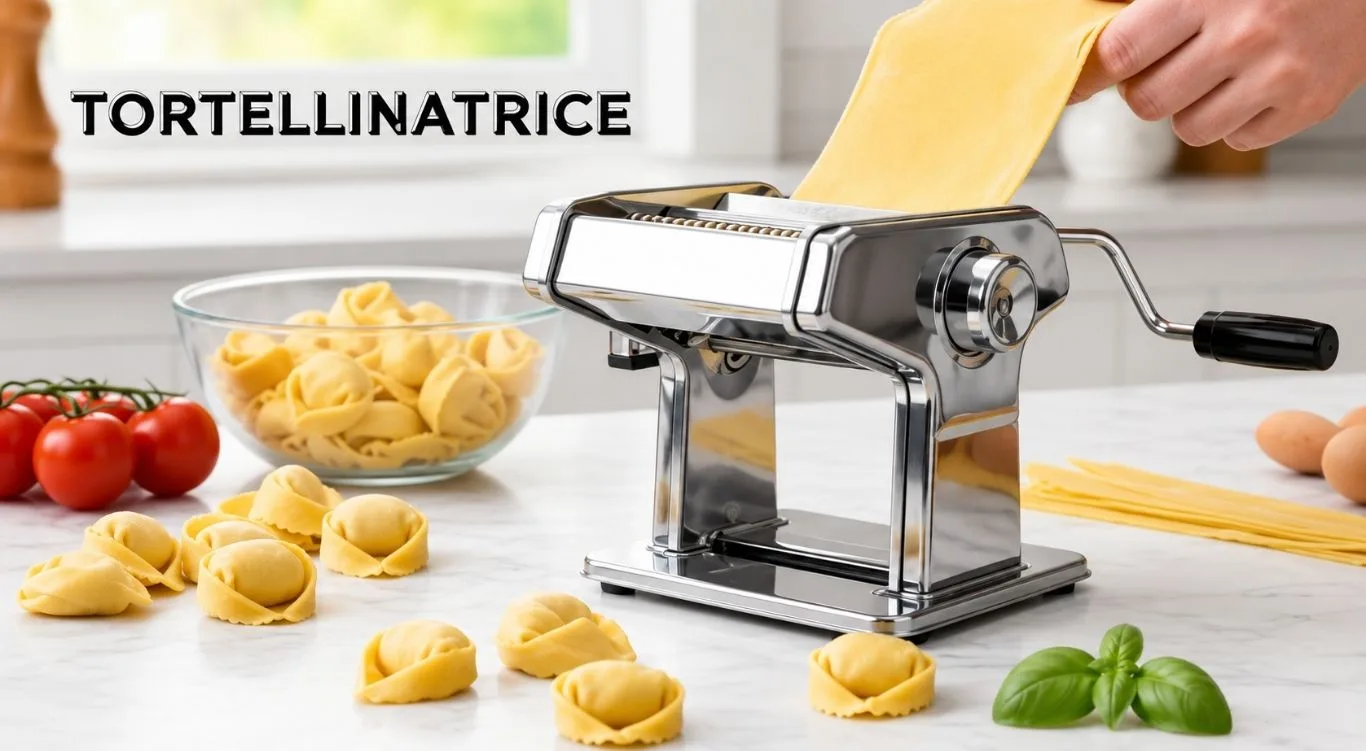
A tortellinatrice is a specialized pasta-forming machine designed to automate the complete production of tortellini: rolling the dough, dosing the filling, folding each piece, sealing the edges, and cutting the final shape. It does in seconds what a skilled hand takes minutes to do, without losing the texture or character that makes tortellini worth eating.
This guide covers everything: what a tortellinatrice is and how it works, the history behind tortellini itself, the real machine brands professionals use, how to choose one, common mistakes, and exactly what sets a great machine apart from a cheap one.
What Is a Tortellinatrice?
A tortellinatrice is a pasta machine built for one specific purpose: making tortellini. Unlike a standard pasta roller that only flattens dough, or a generic pasta extruder that pushes shapes through a die, a tortellinatrice handles the entire stuffed pasta process in a single workflow.
The name says it plainly. In Italian, “tortellini” is the pasta, and the suffix “-atrice” (or “-trice”) marks the word as a machine or tool that performs a task. A tortellinatrice is, literally, “a tortellini maker.”
What Makes It Different from a Standard Pasta Machine?
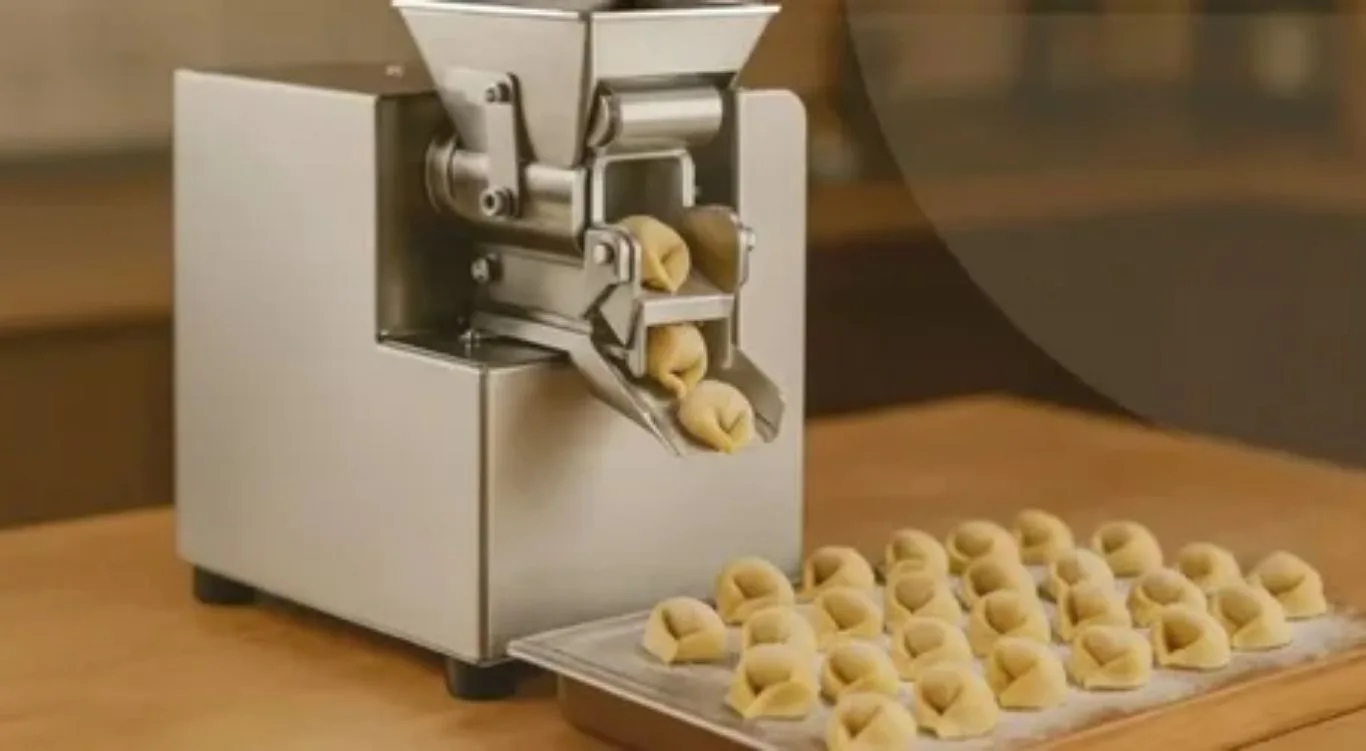
A regular pasta machine does one or two jobs: it rolls dough flat, and some models cut it into ribbons. That is where it stops. A tortellinatrice does five jobs at once:
- Roll the fresh pasta dough into thin, uniform sheets
- Does a precise amount of filling onto the dough at exact intervals
- Folds the dough over the filling into the correct triangular or round form
- Seals the edges so the filling cannot escape during boiling
- Cuts and shapes each piece into the traditional tortellini ring
The result is a continuous output of identical tortellini, ready to cook or freeze.
Who Uses a Tortellinatrice?
A tortellinatrice is useful for three very different types of users, and the right machine depends entirely on which one you are.
Home enthusiasts use compact, manual, or semi-electric models that sit on a countertop. These typically produce 50 to 100 pieces per hour. Serious home cooks who make fresh pasta regularly find them indispensable.
Small restaurants and pasta shops, called pastifici, use semi-automatic machines with higher output, typically in the range of 35 to 60 kilograms of tortellini per hour. These machines are larger and built from food-grade stainless steel for easy cleaning.
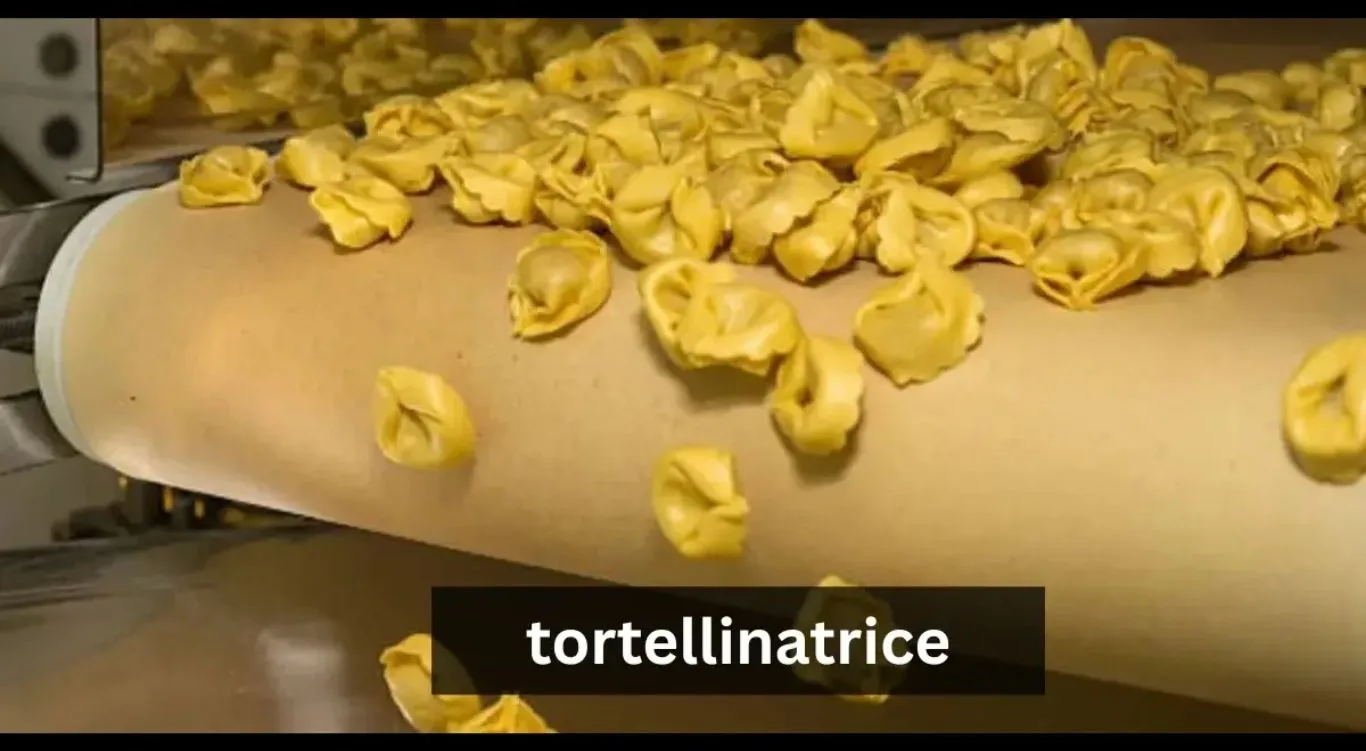
Industrial producers use fully automated systems capable of producing between 5,000 and 15,000 individual tortellini per hour, integrating with conveyor systems, weighing units, and packaging lines.
Read more: Gráinne Hayes: The Untold Story of Nigel Farage’s First Wife
The History of Tortellini and Why the Tortellinatrice Exists
You cannot fully understand the tortellinatrice without understanding what it was built to protect.
Tortellini: A Pasta Born from Legend
Tortellini originated in the Emilia-Romagna region of northern Italy, specifically in the rival cities of Bologna and Modena. Written references to tortellini at Bolognese tables date as far back as the 12th century, making this one of the oldest documented pasta shapes in existence.
The most famous legend of tortellini’s origin involves Venus, the Roman goddess of love. According to the story set in the town of Castelfranco Emilia, halfway between Bologna and Modena, Venus arrived at a local inn disguised as a traveler. The innkeeper, captivated by her beauty, peered through the keyhole of her door. \
The only thing he could see was her bare navel. So spellbound was he that he rushed to his kitchen, rolled out a sheet of fresh egg pasta, and created a shape in tribute: small, curved, and sealed like a little ring. The word used in Italian to describe this shape is “ombelico di Venere,” Venus’ navel.
Every year, the town of Castelfranco Emilia holds a festival to honor this legend, with processions, Renaissance costumes, and a theatrical re-enactment of the moment that supposedly gave birth to Italy’s most beloved filled pasta.
The Dotta Confraternita del Tortellino
In 1974, a group of pasta guardians in Bologna formalized the original tortellini recipe by registering it with the Bologna Chamber of Commerce. This group, the Dotta Confraternita del Tortellino (the Learned Brotherhood of the Tortellino), still exists today and continues to protect the authentic recipe and preparation methods.
The official registered filling consists of loin of pork, prosciutto crudo, mortadella di Bologna, Parmigiano Reggiano, eggs, and nutmeg. Any variation from this formula is considered by the Brotherhood to be a different dish entirely. The Confraternita also insists that genuine tortellini in brodo must be served in capon broth, not cream sauce, not tomato, and not anything else.
This level of cultural seriousness explains why the tortellinatrice matters so much. It is not just a kitchen gadget. It is the mechanical guardian of a shape that a formal brotherhood has fought to protect for over fifty years.
Why Manual Production Could Not Keep Up
For centuries, tortellini were made by the sfogline emiliane, the skilled women of Emilia-Romagna whose entire professional identity centered on rolling pasta by hand with a wooden rolling pin called a mattarello. Each sfoglina could produce hundreds of tortellini per session, but the skill took years to develop, and the labor was exhausting.
As Italian cuisine spread globally through the 20th century, and as restaurants and supermarkets needed tortellini in quantities that no team of sfogline could sustain, Italian engineers began designing machines that could replicate the folding motion mechanically. The first commercial tortellinatrice models appeared in the mid-20th century. By the late 20th century, they had evolved into the sophisticated systems used today.
The best modern machines, like the Lineapasta FK 250 made in Italy by Lineapasta, are specifically designed to reproduce what their manufacturer describes as “the closing of the tortellino as carried out by the sfogline emiliane.” The machine mimics the hand-folding technique, not just the shape.
How a Tortellinatrice Works: Step by Step
The Five Stages of Tortellini Production
Every tortellinatrice, whether a home model or an industrial system, moves through the same five mechanical stages:
Stage 1: Dough Sheeting. Fresh pasta dough feeds into calibrated rollers that flatten it into a uniform sheet of the correct thickness. Most tortellini require dough between 0.5mm and 1mm thick. Consistency here is critical. Dough that is too thick produces heavy, doughy tortellini. Dough that is too thin tears during folding.
Stage 2: Filling Dosing. The machine’s filling system drops a precise portion of filling onto the dough sheet at regular intervals. The amount is calibrated based on the size of the tortellini being produced. Commercial machines allow the operator to adjust filling weight to match the recipe.
Stage 3: Folding. The machine folds the dough over the filling, creating a triangle or half-moon shape that will become the base of the ring. This is the step that most distinguishes a tortellinatrice from a ravioli machine: the fold creates a specific geometry that allows the next step to work correctly.
Stage 4: Sealing. Pressure is applied to the dough edges around the filling to create a tight seal. A poor seal causes the tortellini to burst open during boiling, releasing the filling into the water and ruining the dish. Good machines apply consistent pressure without tearing the dough.
Stage 5: Ring Formation and Cutting. The folded and sealed shape is wrapped around a finger-shaped former to create the classic tortellini ring, then cut and released. The machine outputs a row of identical rings, each with the correct curvature and sealed overlap.
Read more: Natasha Caine: The Full Story of Michael Caine’s Daughter
Types of Tortellinatrice: Which One Is Right for You?
Manual Tortellinatrice
These are compact, hand-cranked machines built for home kitchens and hobby cooks. They require you to feed the dough and filling by hand while turning a crank. Output is slow, typically 50 to 100 pieces per hour, but the level of control they give you is excellent.
Manual models are generally the most affordable, with prices starting around 100 euros for basic versions and rising to 300 euros for quality-built units. They are ideal for families who make tortellini a few times a month and want consistent results without the learning curve of hand-shaping.
Semi-Automatic Tortellinatrice
These use an electric motor to handle the rolling and forming while you manage the dough feed and filling loading. Output climbs to several hundred pieces per hour, making them suited to cooking schools, catering businesses, and small pasta shops. Expect to pay between 400 and 1,200 euros for a reliable semi-automatic model.
Commercial and Industrial Tortellinatrice
These are the machines that supply restaurants, supermarkets, and food factories. The Facchini TA540-S, produced by Italian manufacturer Facchini Impianti, features touchscreen controls and full stainless steel construction for commercial food safety compliance. The Lineapasta RC265 produces between 40 and 110 kilograms of tortellini, cappelletti, and ravioli per hour. The Ostoni T8 operates at industrial speed with multiple forming punches running simultaneously.
Industrial machines cost thousands to tens of thousands of euros and are built for continuous use, often running eight to twelve hours a day in a professional pasta facility.
Tortellinatrice vs. Ravioli Machine: The Critical Difference
This is a comparison that almost no article explains properly, and it matters more than most buyers realize.
| Feature | Tortellinatrice | Ravioli Machine |
| Pasta shape produced | Ring-shaped tortellini | Square or round flat ravioli |
| Folding mechanism | Wraps around a former, creating a ring | Folds flat, no ring formation |
| Seal type | Overlap and pinch | Press-seal flat edges |
| Filling method | Precise dosing between sheets | A filling deposited between two flat sheets |
| Dough handling | Single sheet, folded | Two sheets pressed together |
| Best for | Tortellini, cappelletti, tortelloni | Ravioli, agnolotti, mezzelune |
| Authentic result | A ring shape cannot be done with a ravioli machine | Flat pillow shape |
A ravioli machine cannot produce a genuine tortellino. The ring shape requires a folding and wrapping action that a flat-press machine physically cannot replicate. If you want authentic tortellini, a tortellinatrice is not optional. It is the only mechanical path to the right result.
What Most Buyers Get Wrong When Choosing a Tortellinatrice
This is the section that will save you money and frustration.
The single most common mistake home buyers make is choosing a tortellinatrice based on price alone. A machine that costs sixty euros will produce sixty-euro results: uneven seals, inconsistent dough thickness, and tortellini that split the moment they hit boiling water. The savings on the purchase price disappear the first time a batch of fillings dissolves into the pot.
The Dough Problem No One Warns You About
Every tortellinatrice has a dough tolerance range. It works correctly only within a specific range of dough stiffness and moisture content. Fresh egg pasta dough that is too wet sticks to the forming mechanism and tears. Dough that is too dry cracks along the fold line before the seal can form.
Before you buy any machine, find out what dough hydration it is designed to work with. This information is rarely listed prominently. Ask the seller or check the manufacturer’s technical documentation. A machine built for 45% hydration dough will perform terribly with 55% hydration dough, even if the rest of its specs look good.
The Filling Density Problem
Fillings that contain large chunks, like coarsely chopped mushrooms or visible pieces of meat, often jam the filling doser on smaller machines. The doser is designed to handle smooth, paste-like fillings. If you want to use chunky fillings, you need to check the doser aperture diameter before buying, or be prepared to blend your filling more smoothly than you normally would.
The Sfogline Tradition and What the Tortellinatrice Owes Them
Here is the part of the tortellinatrice story that every article skips.
The women who made tortellini by hand for generations in Emilia-Romagna were not just cooks. They were craftspeople. A skilled sfoglina could roll a pasta sheet so thin you could read through it, working with nothing but a wooden rolling pin three times the length of her arm. The sfoglina tradition was passed from mother to daughter over centuries, and it shaped the flavour expectations that all modern tortellini, machine-made or otherwise, are measured against.
When Italian manufacturers design a tortellinatrice today, they specifically attempt to mimic what the sfogline did with their hands. Lineapasta’s product descriptions explicitly reference replicating the sfogline closure technique. The machine is not trying to replace the sfoglina. It is trying to honour what she built.
World-renowned chef Massimo Bottura, of Osteria Francescana in Modena (three Michelin stars), has spoken at length about the importance of preserving Emilia-Romagna’s pasta traditions in a modern context. He is a vocal advocate for understanding the original techniques before reaching for modern tools. That philosophy runs through the best approach to using a tortellinatrice: understand hand-making first, then let the machine extend what you know.
How Big Is the Market for Fresh Stuffed Pasta?
The tortellinatrice exists because the global appetite for fresh pasta is growing fast and not slowing down.
According to Mordor Intelligence data published in January 2026, the global pasta market was valued at USD 83.45 billion in 2025 and is projected to reach USD 107.66 billion by 2031, growing at a compound annual rate of 4.33%. Within that market, fresh and chilled pasta is the fastest-growing segment, projected to expand at a 9.23% compound annual growth rate through 2031. Stuffed and filled pasta variants are advancing at an 8.41% rate over the same period.
Business Research Insights data from 2025 valued the global fresh pasta market at USD 1.6 billion in 2025, with 61% of consumers surveyed stating they prefer fresh pasta for its higher perceived quality over dried alternatives.
These numbers explain the commercial investment in tortellinatrice technology. As demand for fresh, authentic stuffed pasta grows globally, the machines that produce it at scale become essential infrastructure for the food industry.
Tortellinatrice Maintenance: What Nobody Tells You
A tortellinatrice that is not properly maintained will produce inconsistent results and fail early. These machines work with wet dough, which means residue builds up on every surface that touches the pasta.
After every use, disassemble all food-contact parts and wash them immediately. Dried dough hardens to a cement-like consistency and is very difficult to remove without damaging the machine. Most quality machines are built so that food-contact components can be removed without tools for this reason.
Check the filling doser regularly for residue buildup, especially if you use fillings with high moisture content like ricotta or cooked vegetable mixes. A blocked doser will under-fill tortellini inconsistently, which means some pieces burst during cooking and some are almost empty.
Lubricate all moving mechanical parts according to the manufacturer’s schedule, using only food-safe lubricants. Never use standard machine oil near food-contact areas.
Inspect the forming die every few sessions. Worn or damaged dies produce tortellini with weak seals. Replacing a die costs far less than losing a batch of product.
Tortellinatrice Quick-Setup Checklist for First Use
Before your first batch, work through these steps to avoid the most common beginner mistakes:
- Rest your pasta dough for at least 30 minutes before loading it into the machine; unrested dough tears during rolling
- Dust all contact surfaces lightly with semolina flour, not plain flour, which clumps faster
- Test the filling doser with a small amount before running a full batch; adjust the dose setting if portions look too large or too small
- Run a few practice pieces with scrap dough before loading your good batch; this clears any residue from factory storage
- Have a floured tray ready to receive tortellini as they exit the machine; they stick if they pile up
- Keep the forming speed slow on the first run; increase speed only once seals look clean and consistent
What Is a Tortellinatrice Used For?
A tortellinatrice is used to produce tortellini automatically. It rolls fresh pasta dough into thin sheets, doses filling onto the dough, folds and seals each piece, and shapes the pasta into the traditional ring form. Both home cooks and commercial pasta producers use tortellinatrice machines to save time, ensure uniform results, and scale production without losing the authentic texture of handmade Italian pasta.
How Much Does a Tortellinatrice Cost?
A tortellinatrice for home use typically costs between 100 and 300 euros for a manual model. Semi-automatic versions designed for small restaurants and caterers range from 400 to 1,200 euros. Commercial and industrial tortellinatrice systems from manufacturers like Facchini Impianti, Lineapasta, and Ostoni cost several thousand to tens of thousands of euros, depending on output capacity and automation level.
FAQ About the Tortellinatrice
What does tortellinatrice mean?
Tortellinatrice is an Italian word that means “tortellini maker.” It combines “tortellini,” the ring-shaped stuffed pasta from Emilia-Romagna, with the suffix “-atrice,” which in Italian indicates a machine or tool that performs a specific task.
Can a tortellinatrice make other pasta shapes?
Many models can make cappelletti and tortelloni as well as tortellini, since these shapes use a similar folding and sealing technique. Some machines accept interchangeable dies or molds that allow additional shapes. Ravioli can sometimes be produced with a flat-press attachment, but a tortellinatrice is not the same machine as a ravioli maker.
Is a tortellinatrice easy to use for beginners?
Yes, with the right expectations. The machine handles the mechanical steps, but you still need to prepare good pasta dough and a well-made filling. Learning the correct dough consistency and setting the filling dose accurately takes a few practice runs. After that, the process becomes very straightforward.
How fast does a tortellinatrice produce tortellini?
Home manual models produce roughly 50 to 100 tortellini per hour. Semi-automatic commercial models produce hundreds per hour. Industrial machines like the Lineapasta RC265 produce between 40 and 110 kilograms of product per hour, which translates to thousands of individual pieces.
What fillings can I use in a tortellinatrice?
Any smooth, paste-like filling works well: the classic Bolognese mixture of pork, prosciutto, mortadella, Parmigiano Reggiano, egg, and nutmeg; ricotta and spinach; pumpkin with nutmeg; or mushroom and cheese. Chunky fillings with large pieces can jam the doser. Blend any chunky ingredients finely before loading.
What is the difference between tortellini and cappelletti?
Both are ring-shaped stuffed pastas from Emilia-Romagna, but they differ in size, filling, and technique. Tortellini are smaller and traditionally filled with meat and cheese. Cappelletti, common in Romagna, are larger and often filled with ricotta or a different cheese mix. A tortellinatrice can produce both by adjusting the mold settings.
Do I need to rest the pasta dough before using a tortellinatrice?
Yes. Always rest fresh egg pasta dough for at least 30 minutes at room temperature before loading it into the machine. Unrested dough has not fully relaxed its gluten structure and will tear during rolling and folding.
Can a tortellinatrice replace hand-making completely?
For high-volume production, yes. For special occasions where the act of hand-making is part of the experience, no. Many home cooks use both: a tortellinatrice for weekday batches and hand-folding for Sunday lunches when the whole family participates. The machine and the tradition do not compete. They serve different purposes.
What is the Confraternita del Tortellino?
The Dotta Confraternita del Tortellino is the Learned Brotherhood of the Tortellino, founded in Bologna. In 1974, it registered the official recipe for authentic tortellini with the Bologna Chamber of Commerce to protect the dish from variation and commercialization. It remains active today.
Where can I buy a tortellinatrice?
Home models are available from specialty kitchen stores, Italian cooking equipment retailers, and online platforms. Commercial machines are purchased directly from manufacturers like Lineapasta, Facchini Impianti, and Ostoni, or through professional catering equipment suppliers.
Conclusion
Tortellini is one of the most technically demanding pasta shapes on earth. Its ring form, its precise seal, and its thin-walled structure around a specific filling have been the subject of rivalry, legend, and formal cultural protection for over eight hundred years. The tortellinatrice exists to make that demanding shape accessible without abandoning what makes it worth the effort.
In May 2026, the global appetite for fresh stuffed pasta is growing faster than the sfogline of Emilia-Romagna could ever satisfy by hand. The tortellinatrice is the bridge between a centuries-old tradition and a world that wants to eat it every day.
Choose the right machine for your scale, learn your dough, respect your filling, and you will produce tortellini that honor the legend of Venus and satisfy everyone at the table.
For more on the deep history and cultural significance of tortellini in Italian culinary heritage, the Wikipedia article on tortellini is an excellent starting point.