
Oronsuuts Meaning: The Complete Guide to Mongolian Housing
Oronsuuts is a Mongolian word written as “орон сууц” in the Mongolian script. In simple English, it means a home, apartment, or residential housing. The word is used every day in Mongolia, especially in cities, when people talk about where they live, where they want to move, or what kind of housing they are looking for.
If you have seen this word online and are not sure what it means, this guide explains everything clearly and honestly.
What Does “Oronsuuts” Mean?
“Oronsuuts” is made up of two Mongolian words. The first part, “орон,” means place or space. The second part, “сууц,” means dwelling or residence. Together, they form a word that simply means residential housing.
In everyday use, the word refers to apartments and urban living spaces, particularly the kind of multi-unit residential buildings found in Mongolian cities.
Quick Facts About the Word
- Language of origin: Mongolian
- Written in Mongolian script as орон сууц
- Romanized spelling: Oronsuuts
- Primary meaning: Home, apartment, residential housing
- Most common context: Urban real estate and city housing in Mongolia
Why Do People Search for Oronsuuts Online?
Many people outside Mongolia encounter this word on the internet and feel confused because different websites explain it in very different ways. Some say it is a housing term. Others describe it as a digital platform, a technology concept, or even a streaming website.
This confusion exists because the word is uncommon in English, and different content websites have used it in different ways to attract search traffic.
Common Reasons People Search for Oronsuuts
- They want to understand what the word actually means
- They came across it in a housing or real estate context
- They saw it mentioned on a website and are not sure what kind of platform it refers to
- They are researching Mongolian culture or language
- They want to know if it is related to a specific app or service
The Original and Correct Meaning of Oronsuuts
The true meaning of Oronsuuts is housing. It has been used this way in Mongolia for a long time and remains the most accurate and widely accepted definition of the word.
In Mongolia, especially in the capital city, Ulaanbaatar, apartment living is extremely common. Cold winters and dense urban populations make multi-unit residential buildings a practical necessity. “Oronsuuts” is the everyday word people use when talking about these homes.
How Mongolians Use the Word in Daily Life
- Searching for an apartment to rent or buy
- Discussing the size, location, or price of a home
- Referring to government housing programs
- Talking about moving from a rural area to a city apartment
- Describing the type of building someone lives in
The Mongolian Housing System and Oronsuuts
To fully understand the word, it helps to understand the housing system it describes. Mongolian cities have grown rapidly over the past few decades as people moved from rural areas to urban centers in search of work, education, and better services.
This urban growth created a strong demand for structured residential housing. Oronsuuts’ buildings were developed to meet this need and are now a central part of city life across Mongolia.
Features of a Typical Oronsuuts Building
- Multi-unit apartment structure with multiple floors
- Centralized heating systems for cold Mongolian winters
- Shared utilities, including water and electricity infrastructure
- Collective maintenance and building management services
- Security systems and controlled building access
- Waste management services shared across residents
Types of Oronsuuts Found in Mongolian Cities
Not all Oronsuuts buildings are the same. They vary in age, quality, size, and price. Understanding the different types helps explain how the housing market works in Mongolia.
New Construction Oronsuuts
These are buildings constructed in recent years. They tend to use modern materials, better insulation, and more efficient energy systems. They are generally more comfortable and more expensive than older buildings.
Older Oronsuuts Buildings
Many apartments in Mongolia were built decades ago, some during an earlier era of development. These buildings are often cheaper but may require more maintenance. They remain popular because of lower rental costs and central locations.
Government-Supported Oronsuuts
The Mongolian government runs housing programs specifically designed to help citizens who cannot afford market-rate apartments. These state-supported homes are distributed through official portals and give priority to lower and middle-income families.
Mixed-Use Oronsuuts Complexes
Some residential buildings include commercial spaces such as shops, cafes, clinics, or offices on lower floors. Residents benefit from having essential services within the same building or immediate area.
The Government Housing Portal and Oronsuuts
One of the most important platforms connected to the world, Oronsuuts, is the official Mongolian government housing portal at oronsuuts.mcud.gov.mn. This website is operated by the state and serves as a central resource for citizens applying for government-supported housing programs.
What the Government Portal Offers
- Applications for state-subsidized housing programs
- Information about eligibility requirements for housing assistance
- Updates on new apartment construction projects
- Transparent distribution of housing to qualifying applicants
- Resources for understanding housing rights and ownership
Where Oronsuuts Appears in Everyday Mongolian Life
The word is not just used in formal contexts. It is part of daily conversation across the country. From family discussions to social media posts to news articles, Oronsuuts is one of the most commonly used housing terms in Mongolia.
Platforms and Places Where Oronsuuts Commonly Appear
- unegui.mn, one of Mongolia’s largest classified listing websites
- Barilga.mn, a platform focused on construction and real estate
- Facebook groups dedicated to apartment buying and selling
- News articles covering urban development and housing policy
- Social media posts from people searching for or advertising homes
Online Confusion Around Oronsuuts
A significant amount of confusion exists online because different websites have used the word “Oronsuuts” in ways that have nothing to do with housing. Some sites describe it as a streaming platform, a digital tool, or a technology concept.
It is important to understand that these uses are not based on the original meaning of the word. They typically appear in content created for search engine optimization rather than to provide accurate information.
Why This Confusion Happens
- The word is uncommon in English, making it easy to misrepresent
- Content websites sometimes use unfamiliar words to attract search traffic
- Search engines display a mix of housing and non-housing content for the same term
- Readers unfamiliar with Mongolian assume the word must mean something in the digital world
- Some sites describe Oronsuuts as a streaming site, which has no connection to the real meaning
How to Tell If a Source Is Accurate
- If the article connects Oronsuuts to Mongolia, apartments, or housing, it is likely correct.
- If the article describes Oronsuuts as an app, streaming platform, or technology, it is likely inaccurate.
- Government and real estate sources are the most reliable for the true meaning.
- Articles that mention “орон сууц” in Mongolian script are almost always referring to the correct housing definition.
Oronsuuts and Urban Development in Mongolia
The growth of Oronsuuts as a housing system is closely tied to Mongolia’s rapid urbanization. In recent decades, large numbers of people have moved from rural areas and traditional ger districts into cities, particularly Ulaanbaatar.
This migration created enormous pressure on the urban housing supply. The development of apartment complexes and residential buildings became a government and private sector priority.
How Urbanization Shaped Oronsuuts
- Rural to urban migration increased demand for city apartments
- Traditional ger housing became less practical for growing city populations
- Government housing programs were created to address affordability challenges
- Private construction companies expanded apartment supply across the city
- Infrastructure improvements made larger residential complexes more viable
Traditional Housing vs Oronsuuts
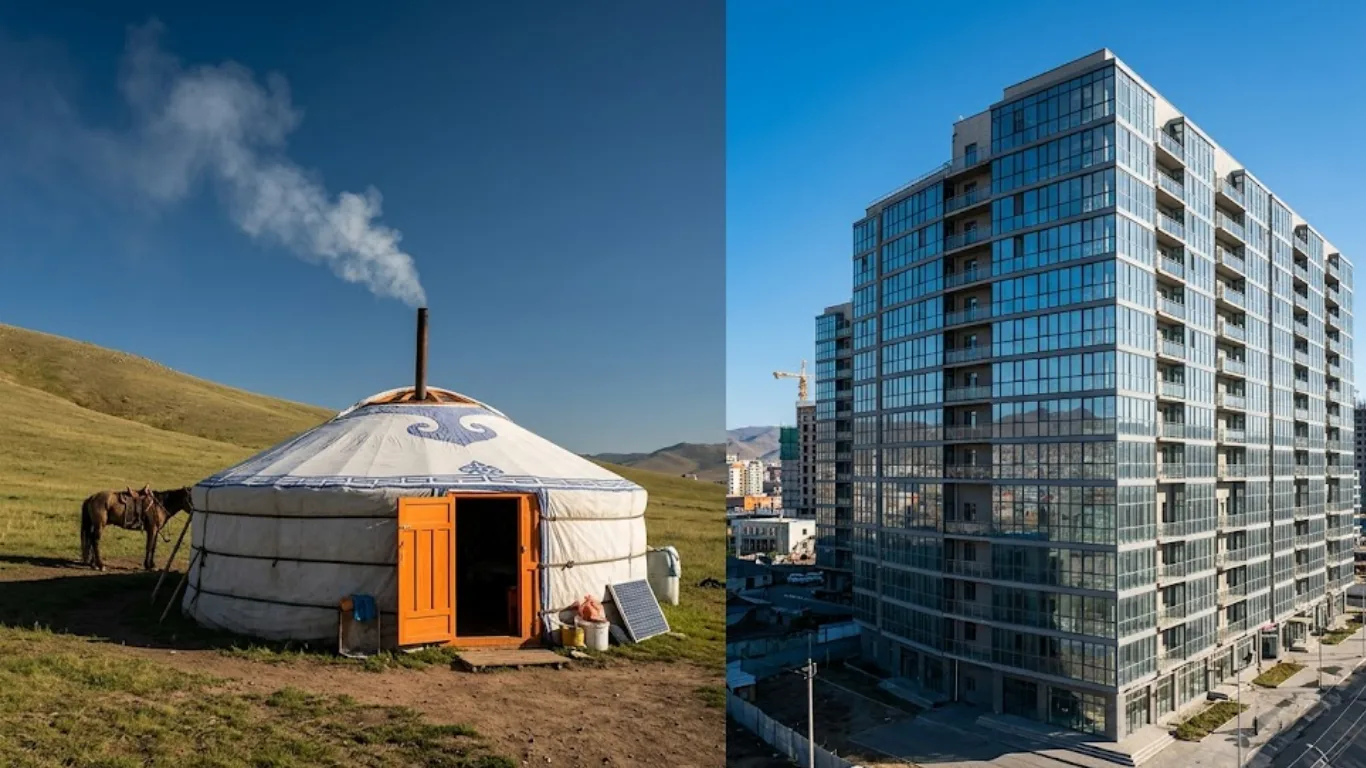
Understanding Oronsuuts becomes clearer when you compare it to Mongolia’s traditional housing style. The ger, a portable circular tent, has been the traditional home of Mongolian nomadic communities for centuries.
Key Differences Between Ger and Oronsuuts
- A ger is portable and designed for movement across land. Oronsuuts is a permanent fixed structure.
- Gers suit a nomadic lifestyle in open rural areas. Oronsuuts suits a settled urban lifestyle.
- Ger communities exist on the outskirts of cities and in rural areas. Oronsuuts’ buildings are concentrated in city centers and developed neighborhoods.
- Gers are typically owned individually and set up on land. Oronsuuts units are part of shared multi-floor buildings.
Benefits of Living in Oronsuuts
Modern apartment living in Mongolia offers several practical advantages, particularly for people who have moved from rural areas or smaller towns.
Main Benefits for Residents
- Proximity to jobs, schools, hospitals, and shopping areas
- Protection from Mongolia’s extreme cold winters through centralized heating
- Access to reliable utilities, including water and electricity
- Security systems and managed building maintenance
- Community environment with neighbors and shared spaces
- Better access to public transportation networks
Challenges Associated with Oronsuuts Living
Like any housing system, Oronsuuts also comes with challenges that residents and policymakers continue to address.
Common Challenges
- Affordability remains a barrier for many low-income families in cities
- Older buildings often require significant renovation and maintenance
- Growing urban populations create ongoing pressure on housing supply
- Some areas face issues with building quality and infrastructure aging
- Managing shared spaces and utilities requires organized community systems
The Future of Oronsuuts in Mongolia
As Mongolia continues to develop economically and its cities continue to grow, Oronsuuts will remain a central part of urban life. Government programs, private investment, and urban planning policies all play a role in shaping how the housing system evolves.
Trends Shaping the Future of Oronsuuts
- Smart building technology is being incorporated into new constructions
- Energy-efficient designs to reduce heating costs and environmental impact
- Expansion of government housing assistance programs
- Growth of online real estate platforms connecting buyers and renters
- Urban planning efforts to improve infrastructure around residential areas
Conclusion
“Oronsuuts” is a straightforward Mongolian word that means residential housing, apartment, or home. It is one of the most commonly used housing terms in Mongolia and plays a central role in urban real estate, government programs, and daily conversations about where people live.
The confusion that exists online about this word comes from websites that have used it out of its original context. The true and correct meaning is always connected to housing, apartments, and city living in Mongolia.
Whether you are researching Mongolian culture, looking for information about urban development, or simply trying to understand a word you encountered online, the answer is clear. Oronsuuts means a place where people live, and in modern Mongolia, that most commonly means an apartment in a city.
Frequently Asked Questions About Oronsuuts
What does Oronsuuts mean in English?
Oronsuuts means housing, apartment, or home in English. It comes from the Mongolian language and is written as “орон сууц” in the Mongolian script. The word is used to describe residential buildings, particularly apartments in urban areas.
Is Oronsuuts a streaming website or digital platform?
No. Oronsuuts is not a streaming website or digital platform. Some websites have used the word in confusing ways, but the original and correct meaning is related to housing and real estate in Mongolia. Any website describing it as a streaming service or digital tool is using the word incorrectly.
Where is the word “Oronsuuts” most commonly used?
The word is most commonly used in Mongolia, especially in the capital city, Ulaanbaatar. It appears in real estate listings, government housing portals, social media groups, news articles, and everyday conversations about renting or buying apartments.
Is there an official government website for Oronsuuts?
Yes. The Mongolian government operates an official housing portal at oronsuuts.mcud.gov.mn. This site is used for state-supported housing programs and provides information for citizens applying for government-assisted apartments.
What is the difference between a ger and an Oronsuuts?
A ger is Mongolia’s traditional portable circular home designed for nomadic living in rural areas. “Oronsuuts” refers to permanent apartment buildings in cities. The two represent very different housing styles that reflect the contrast between traditional nomadic life and modern urban living.
Why do so many websites give different meanings for Oronsuuts?
Many websites use unfamiliar foreign words like “Oronsuuts” to create content that attracts search traffic, even if the information they provide is not accurate. The original and only correct meaning of “Oronsuuts” is “housing” or “apartment” in Mongolian. Always check whether a source connects the word to Mongolia and real estate before trusting the explanation.
Truth Check: Contrary to some search results, Oronsuuts is NOT a technology app or a streaming service. It is a literal translation for “housing” in Mongolian.